Positive Displacement vs. Centrifugal Pumps
Here at AMETEK PDT, we often have a customer approach us wanting a particular type of pump for their application. After our engineers dig deeper into the customer’s needs, we discover that another type of pump would work better for their application. Our experts are here to help you select the ideal pump for your needs, but first, let’s explore the advantages of each type to give more insight into our selection process.
Centrifugal Pumps
Centrifugal Pumps operate based on centrifugal force by rotating an impeller to move fluid. If your application requires
higher flow rates and lower pressure rates, a centrifugal pump is most likely going to be the solution you are looking for. Centrifugal pumps have
lower audible noise than positive displacement pumps. Centrifugal pumps are also highly reliable, with zero contact operation.
Typical Applications
You’ll find a centrifugal pump used in liquid cooling systems with high heat dissipation and higher flow rates. You would also see this type of pump in a low-pressure fuel application, such as a fuel boost pump.
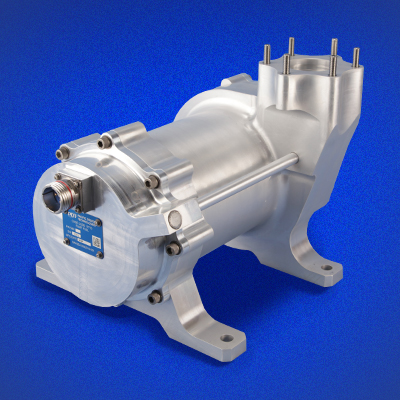
Positive Displacement Pumps
Positive Displacement Pumps operate by trapping a fixed amount of fluid and forcing it through the system. These pumps are most beneficial to applications that require lower flow rates and higher-pressure rates. Positive Displacement pumps can also deliver constant flow rate, regardless of system impedance. They are also capable of operating at lower inlet pressures.
Typical Applications
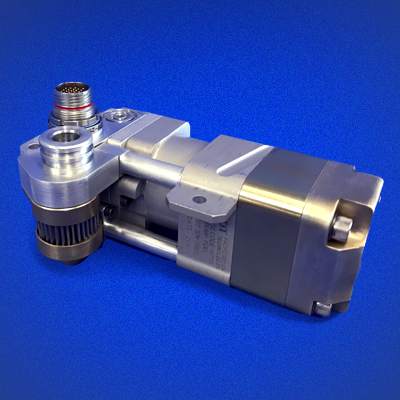
Positive Displacement pumps are often found in smaller heat dissipation liquid cooling systems which may have a higher system impedance. You would also see these pumps used in high-pressure fuel applications, lube and scavenge applications, and hydraulic applications.
Which Pump is Right for Your Application?
Still wondering which pump you should use? Below is a flow chart of factors that our engineers consider when selecting the ideal pump for our customers.

As always, our engineers are available to discuss your requirements. Get in touch with us today.