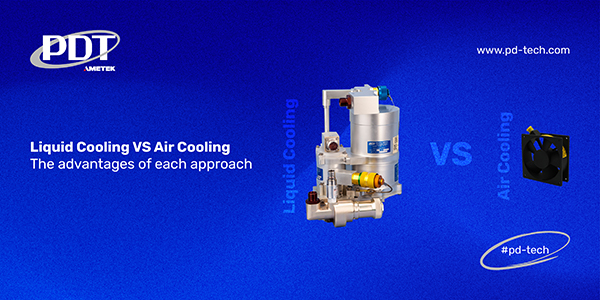
Liquid VS Air Cooling
Every aerospace application is unique and has highly specific requirements depending upon the needs of the vehicle and the mission. Cooling is one of the most important considerations, as it helps maintain optimal conditions and extends the lifespan of critical equipment. Both air cooling and liquid cooling have their place in aerospace and defense applications. Several factors go into selecting what cooling method would work best in each unique scenario.
The Liquid Advantage
Liquid cooling systems are particularly beneficial in environments where extremely precise temperature management is essential. With greater thermal inertia, liquid systems can stabilize equipment temperatures, significantly reducing thermal fluctuations. This stability is crucial in industries like aerospace and defense, where even minor temperature variations can degrade performance and reliability in certain systems. By maintaining consistent operational temperatures, liquid cooling ensures that sensitive components function within optimal thermal conditions.
Liquid cooling is sometimes advantageous over air cooling because significantly more heat can be transferred using a liquid coolant, at lower weight and in a smaller package, than by an equivalent amount of air. This is due to the greater density and thermal capacity of liquid coolants compared to air.
Despite the advantages of liquid cooling, air cooling is not without its strengths. It is generally less complex, easier to install, and requires less maintenance than liquid cooling systems. Air cooling is sufficient for many environments, making it a cost-effective and reliable choice when extreme cooling solutions are not necessary. Our partners at AMETEK Rotron create air cooling solutions in many aerospace and defense applications. Often, air and liquid cooling are both used on the same aircraft, in different systems. For instance, the Boeing 787 is equipped with both Rotron fans as well as PDT liquid cooling systems.

A Boeing 787 has both liquid and air cooling installed on board
" Liquid cooling is sometimes advantageous over air cooling because significantly more heat can be transferred using a liquid coolant, at lower weight and in a smaller package, than by an equivalent amount of air."
Practical Applications
From military jets like the F-16 and F/A-18 to advanced commercial aircraft such as the Boeing 787, liquid cooling has proven its worth. Jet fighter aircraft operate in a very challenging environment with high heat loads, tight packaging, and weight constraints. A properly designed liquid cooling system is often the best solution for addressing this these types of challenges.
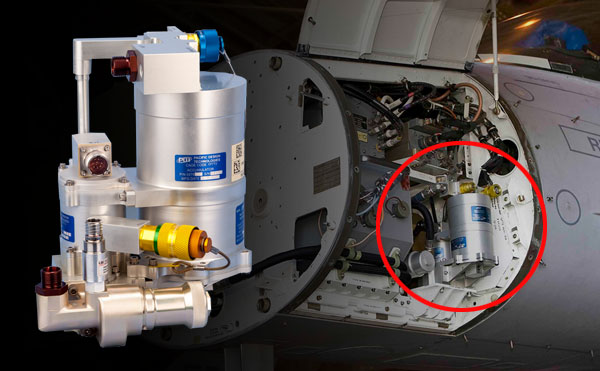
A PDT Liquid Cooling Solution installed in the nose cone of a Jet Fighter
Liquid cooling systems are also used in systems for spacecraft, including the Mars rovers Curiosity and Perseverance. In the harsh Martian environment, where air cooling is impractical and passive systems are insufficient, PDT’s robust liquid cooling technology allows these rovers to operate in extreme environments. Use of a properly designed liquid cooling system allows the Rovers to operate continuously, regardless of the environment, and for the science instruments to deliver high quality data, while extending the lifespan of these instruments.
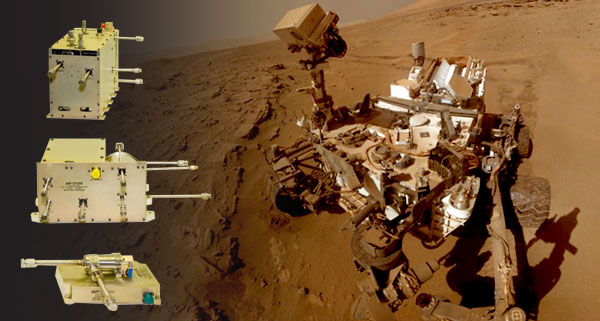
The Mars Rovers utilized PDT's Liquid Cooling to safely travel to the red planet
Is Liquid Cooling your next solution?
If you’re facing cooling challenges relating to extreme space constraints, a custom liquid cooling system might be the solution. At PDT, we specialize in tailoring liquid cooling solutions to meet specific application needs. Reach out to a PDT engineer today to see if liquid cooling is the right fit for your system.