In commercial aerospace, weight, space, and safety are all key considerations for every system inside of the aircraft. Cooling is critical to support vital equipment, keeping sensitive electronics at the optimal temperature. As modern aircraft become more advanced, the need for effective cooling has never been more important. PDT provides a variety of solutions for major aircraft platforms.

Supplying Industry Leaders
PDT proudly provides liquid cooling solutions and pumps for wide-body and narrow-body commercial aircraft. Our products are trusted to help ensure the safety of passengers from small private flights to commercial flights that transport hundreds.
Supplying Specialized Requirements
PDT offers customized solutions for your specific platform requirements. Our experienced engineering team is prepared to adapt our products to support your new or existing systems.
| Typical Applications |
Major Customers |
Platforms |
- Avionics Cooling
- Lubrication Pumps
- Fuel Pumps
- Equipment and Cargo Compartment Cooling
|
- Boeing
- Gulfstream
- Bombardier
|
- Boeing 787
- Boeing 777
- Global 7000 & 8000
|
PDT continues to develop new commercial products to support the ever-evolving commercial aerospace industry. Get in touch with our industry experts to find out how our solutions can improve the efficiency of your platforms.
Ask an Expert
Boeing 787 Liquid Cooling System Reservoirs
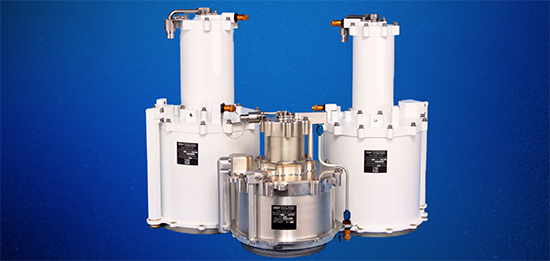
PDT designed, developed and qualified four unique fluid reservoirs for one of the biggest commercial aircraft platforms – the Boeing 787 Dreamliner. This large commercial plane had very specific cooling needs, requiring PDT engineers to adapt to stringent weight and space requirements.
The reservoirs form a part of three different cooling loops: Power Electronics Cooling, Integrated Cooling and Forward Cargo Air Conditioning. Each reservoir is a ‘bootstrap’ or pressure multiplying type, wherein high-pressure fluid supplied from the cooling system circulation pump is used to provide static inlet pressure to that same pump. The reservoirs create this pressure multiplying effect based on the difference in area between the high pressure and low-pressure chambers; a single piston connects the two cylinders together and transfers pressure from the high to the low-pressure sides of the fluid circuit.
Unlike a traditional cooling system accumulator which maintains a minimum fluid pressure regardless of the status of the pump, PDT’s reservoir causes the system pressure to fall to zero when the pump is off. The benefit of this feature is to greatly reduce the time that the liquid cooling system is pressurized, which extends the life of the system and eases maintainability.
PDT designed the reservoirs to comply with the highest engineering, manufacturing and quality standards to ensure a highly reliable and consistent product for this important new aircraft. An extensive production part approval process (PPAP) for the reservoirs was completed, which included the completion of Design and Process Failure Modes and Effects Analysis (D/PFMEA), process flow, process control, process readiness, key characteristics, measurement systems analysis, materials, marking and packaging. All aspects of design and manufacturing for the reservoirs are under strict configuration management to ensure a consistent product with the highest quality.
To support Just-In-Time production and minimize inventory levels for our customer, PDT maintains a stock of finished goods and detail parts inventory for the reservoirs. Customer demand is filled weekly, and a Kanban system is used to create internal demand to replenish the finished goods stock and pull necessary detail parts from PDT’s supply chain. Lean Manufacturing principles are employed to eliminate waste in the production system and all team members are part of ongoing continuous improvement projects for this and other production programs.
Contact Us